Subject Areas and Session Organizers
The thematic session invites abstracts and full-length papers on fatigue, creep, and fracture of materials/components from strategic and other sectors, along with associated micro-mechanisms of deformation/damage and their modelling. Submissions on the structural integrity analysis of high-temperature systems designed to address the above failure modes are also highly encouraged.

Prof. Niraj Mohan Chawake
(IIT, Kanpur)

Prof. Ushasi Roy
(IIT, Kanpur)
Prof. Atul Ballal
(VNIT, Nagpur)
Dr. G. V. Prasad Reddy
(IGCAR, Kalpakkam)
Materials operating in extreme environments must withstand irradiation, high temperatures, and aggressive media without significant degradation. This session focuses on testing methodologies and performance evaluation under conditions involving hydrogen, irradiation, steam, and corrosive environments, with emphasis on degradation mechanisms, reliability, and advanced experimental and modeling approaches.
Dr. Apu Sarkar
(BARC, Mumbai)
Prof. Ankur Chauhan
(IISc, Bengaluru)
Prof. Dhiraj Mahajan
(IIT, Ropar)
Prof. Sumantra Mandal
(IIT, Kharagpur)
Prof. Surendra Kumar M
(IISc, Bengaluru)
Dr. Sujata Mathukumilli
(NAL, Bengaluru)
Dr. Anandamurugan Subramanian
(Baker Hughes, Bengaluru)
Dr. Amitabha Datta
(NAL, Bengaluru)
This symposium highlights recent advances in multiscale modelling of plasticity and damage, with emphasis on linking microstructural mechanisms to macroscopic structural response and failure. Contributions are invited on crystal plasticity, phase-field and continuum damage modelling, computational homogenization, fracture and fatigue, dislocation-based approaches, multiscale simulations, data-driven modelling, and experimental validation for predicting material degradation and structural integrity across scales.
Prof. Ilaksh Adlakha
(IIT, Madras)
Prof. Masiur Rahman
(IIT, Bhubaneswar)

Prof. Suchandrima Das
(IISc, Bengaluru)
AI ML in Structural Integrity Recent advancements of AI/ML applied on complex data have redefined the structural integrity area through evolution in Damage Detection, Residual Useful Life, Predictive Maintenance. Accurate and Robust Physics plus Data driven approach is increasingly finding its application into Assets, leading to enhanced Safety, Reliability and Availability.
Dr. Unnat Mankad
(Baker Hughes, Bengaluru)
The technical session “Structural Integrity in Civil Structures” focuses on approaches that ensure the strength, safety, and reliability of buildings and infrastructure throughout their service life. Contributions addressing damage assessment, failure prevention, and maintaining structural integrity under real-world conditions are especially encouraged. Studies on structural behaviour under different loads, e.g., waves, earthquakes, impact loads, etc., as well as in-service and extreme exposure conditions, e.g., seawater environment, extreme climatic variations, etc., are also invited.
Prof. Hemant Kaushik
(IIT, Guwahati)
Dr. Raghava G
(Ex-CSIR-SERC)
This session invites submissions on the multiscale biomechanics and biomaterial characterization ranging from cells, tissues and synthetic systems with wide range applications in biomedical engineering. Topics include design and development of biomedical devices, mechanical testing protocols, and characterization techniques for mechanics, soft and living systems, alongside identifying structure-property correlations in biological and biomaterials.

Prof. Aritra Chatterjee
(IIT, Guwahati)
Prof. Namrata Gundiah
(IISc, Bengaluru)
This session invites submissions on the multiscale biomechanics and biomaterial characterization ranging from cells, tissues and synthetic systems with wide range applications in biomedical engineering. Topics include design and development of biomedical devices, mechanical testing protocols, and characterization techniques for mechanics, soft and living systems, alongside identifying structure-property correlations in biological and biomaterials.
Gopi Krishna Rangarajan
(DRDL, Hyderabad)
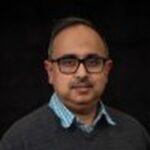
Dr. Arindam Banerjee
(NAL, Bengaluru)
Technical Session
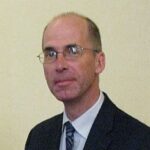
Dr. Andrew Rosenberger
(AFRL, USA)
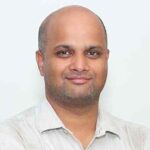
Prof. Manjesh Singh
(IIT, Kanpur)
Research in additive manufacturing (AM) today spans several interconnected focus areas, especially around materials, processes, quality, and digital integration. It mainly focuses on:
- developing new materials and tailored micro structures for metals, polymers, and composites;
- optimizing printing processes and reducing defects such as porosity and residual stress;
- using simulation, data science, and AI to predict performance and enable digital twins; and
- exploring hybrid and multi‑material systems for advanced applications in aerospace, biomedical, and automotive sectors.
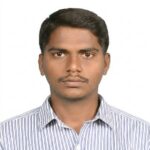
Dr. Manivannan R
(CMERI, Durgapur)
Dr. Gopinath Muvvala
(IIT, Hyderabad)
Prof. Palani I A
(IIT, Indore)
The symposium addresses corrosion and environmental degradation issues affecting the structural integrity across different industrial sectors (aerospace, power generation, oil and gas, and manufacturing). We welcome abstracts on topics including but not limited to stress corrosion cracking, corrosion fatigue, hydrogen embrittlement, localized corrosion, high-temperature oxidation, and hot corrosion.
Prof. Karthikeyan Hariharan
(IIT, Bombay)
Prof. Shashi Bhushan Arya
(NITK, Surathkal)
Surface Engineering / Coatings focuses on the design, processing, and characterization of advanced surface layers that enhance wear resistance, corrosion protection, thermal stability, and functional performance of engineering materials. It brings together recent developments in coating technologies, surface modification methods, and application-driven innovations for aerospace, energy, biomedical, automotive, and industrial systems

Dr. Sisir Mantry
(CSIR-IMMT, Bhubaneshwar)

Prof. Devi Lal
(IIT, Jammu)
Aircraft structures in service are subjected to repeated or fatigue loads, thermal variations, and environmental degradation, which results in reduction of stiffness and strength over the time. To extend an aircraft’s operational life beyond its original design limits, Service Life Extension Programs (SLEP) are undertaken to assess and reinforce critical airframe components to maintain safety and airworthiness thereby extending their operational life.
This session focuses on topics on testing methodologies and fatigue performance evaluation required for life extension of aero structures such as Damage tolerance and residual strength evaluation , Repair technologies, Non-destructive testing and in flight strain monitoring techniques for service load determination required for fatigue life evaluation.
Dr. Kishora Shetty
(Boeing, Bengaluru)
Dr Mohan Kumar M
(CSIR-NAL, Bengaluru)
Prof. Rahul Cadambi
(RUAS, Bengaluru)
Prof. Padmanabhan Krishnan
(VIT, Vellore)
Special Symposiums
- Dr. S. R. Valluri Memorial Lecture
- Special session to honour Prof. Vikram Jayaram: Advances in Structural Integrity, Macro to Meso
Pre-conference Workshops on December 7th, 2026:
- New ASTM Standard E3490 on fatigue thresholds
- Testing under extreme environments
- Composite Materials Testing
- Inspection Technologies